pixel
Northland nurse Andrea Nixon awarded Maggie Burn Scholarship

Northland nurse Andrea Nixon awarded Maggie Burn Scholarship
Northland nurse Andrea Nixon awarded Maggie Burn Scholarship

Whangārei-based nurse Andrea Nixon has been named the 2025 recipient of the Maggie Burn Scholarship. Sponsored by Mobile Medical and awarded by the New Zealand Urological Nurses Society (NZUNS), the scholarship will support Andrea’s upcoming trip to Edinburgh, where she’ll help launch EFUNCore – a global Core Educational Framework for Urology Nursing.

The annual scholarship, which supports postgraduate study, advanced clinical training, or attendance at urological conferences or department site visits, honours the late Maggie Burn – a respected clinical nurse specialist known for her expertise, compassion, and tireless commitment to the profession.

Andrea’s career exemplifies those same values. Spanning more than five decades, her contribution to urological nursing in New Zealand is pioneering and profound. Based in Whangārei, the Clinical Nurse Manager works alongside her husband, Urologist Tony Nixon, at Cardinal Points Specialist Clinic. Together, they have delivered public and private urology outpatient services across Northland, earning a reputation for high-quality care in their community. Their roots in the region run deep both professionally and personally. They enjoy the family life that Northland offers and are proud grandparents to eight grandchildren – “Who love spending time fishing on the water at Teal Bay with Grammy and Poppa,” she shares.

Andrea’s work has gone far beyond clinical service. Working alongside Tony, she has coordinated numerous research trials focused on prostate cancer, overactive bladder, Peyronie’s disease, and intraprostatic light therapy. These trials contributed to the clinical use of VESIcare (a medication used to treat an overactive bladder), while others helped refine treatment strategies for metastatic prostate cancer. “The approach to trial selection was simple. It had to improve outcomes or be interesting enough to explore.”

She reflects on the courage of patients who participated in trials, even in advanced stages of illness. “They’d say, ‘I’ve got nothing to lose – maybe this helps the next guy.’ Their bravery was incredibly humbling.”

Andrea and Tony also focused on expanding access to care closer to home. In their first year, when a patient was told they’d need to travel to Auckland for intravesical BCG (a treatment for early-stage bladder cancer), Tony proposed offering it in Northland. Andrea’s response: “Of course we will.” And they did!

A career filled with milestones began in 1990, when she became Palmerston North’s first practice nurse to undertake cervical screening, becoming a member of the Ministry of Health cervical screening task force. This led to the setup of the National Cervical Screening Register, where Andrea facilitated the first training programme for practice nurses in Palmerston North.

A member of the New Zealand Urological Nurses Society (NZUNS) committee since 2008, Andrea became their chairperson in 2013 for six years. During this time, she was also the President of the Australia and New Zealand Urological Nurses Society (ANZUNS). Andrea also helped establish the combined New Zealand urologists and urology nurses conference in 2013, now a key event in the professional calendar.

“In 2019, I was awarded life membership to NZUNS and received the inaugural Urological Society of Australia and New Zealand Award for Contribution to New Zealand Urology by a Urological Nurse.”

With the support of the Maggie Burn Scholarship, Andrea will travel to Edinburgh this month to represent New Zealand at the official EFUNCore launch, held alongside the BAUN (British Association of Urological Nurses) Annual Conference. “This scholarship is helping make that possible. It’s a privilege to be part of something that will shape the future of urological nursing worldwide.”

Despite her many accolades, Andrea remains focused on supporting others, especially empowering rural nurses, district nurses, and GPs through webinars and educational resources. “We’re stronger when we learn together.”

To those entering the field, Andrea offers simple advice: “Join NZUNS. Go to conferences. Reach out to your colleagues. The best thing I ever did was connect with other nurses who were willing to share their knowledge.”
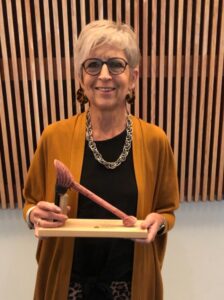
Pictured: Andrea in 2019 with the USANZ Award for services to urology by a urology nurse.
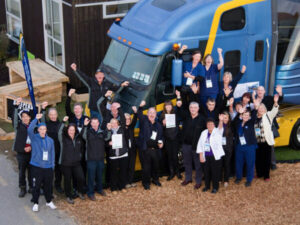
Celebrating 30 years of Mobile Medical

Celebrating 30 years of Mobile Medical

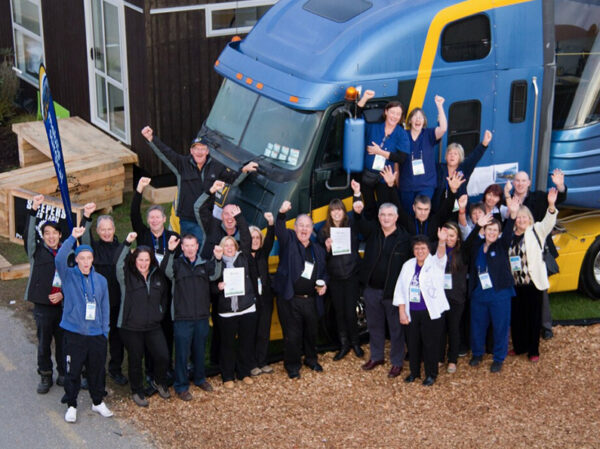
Since 1995, Mobile Medical has been transforming the way New Zealanders access kidney stone treatment. This year, the organisation proudly celebrates 30 years of delivering expert medical care to communities across Aotearoa.

It all began with a bold idea. Urologists Dr Stu Gowland and Dr Jon Cadwallader recognised a major challenge: lithotripsy, a non-invasive treatment that uses focused shockwaves to break up kidney stones, required expensive, specialised equipment. For many regions, the cost of a standalone machine was simply out of reach. Their solution was as practical as it was visionary – a mobile unit that could travel the country, bringing advanced care directly to patients.

Launched in 1995, the mobile lithotripsy unit became a cornerstone of equitable healthcare delivery, providing urological care to underserved regions. The unit is equipped with a Storz Modulith SLX-F2 lithotripter and operates on a four-week cycle – three weeks in the North Island and one in the South — visiting both public and private hospitals from Whangārei to Dunedin. This shared service model ensures patients can receive treatment locally from their own urologist, reducing the need for costly travel and supporting continuity of care.

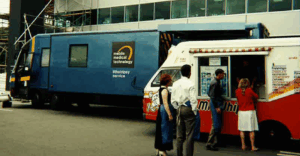
Pictured: Mr Whippy joins the Mobile Medical unit.

Since treating its first patient at Southern Cross Hospital in Christchurch, the unit has now treated more than 16,000 New Zealanders. Patients typically return home the same day and resume normal activities within 48 hours – a testament to the effectiveness and convenience of the service.


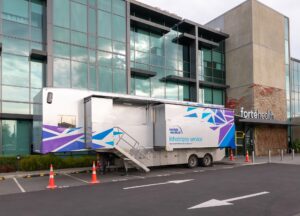
Pictured: In 2021, the new mobile lithotripsy unit was launched

At the heart of Mobile Medical’s 30-year journey are two visionary friends: Dr Stu Gowland and Dr Jon Cadwallader. Their bold idea to bring specialist care directly to rural communities was met with scepticism at first. But through determination, innovation, and a deep commitment to patient care, Stu and Jon turned that vision into reality. Their pioneering work in mobile urological services not only improved access and efficiency but also set a new benchmark for healthcare delivery in New Zealand.

“Stu and Jon brought a bold vision that others said would not work. Their vision was successfully implemented into the health service of New Zealand, and along the way, they brought it with heart and humanity, with patients always at the forefront of their minds,” says Mark Eager, Chief Executive of Mobile Health Group.

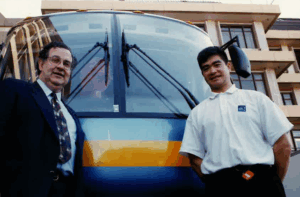
Pictured: (L) Stu Gowland with the old lithotripsy unit.

Mark also acknowledges the challenges the unit has faced, including the recent loss of a host site in Auckland this year, as it now operates its own lithotripter. “This change has created a service gap for patients in Northland and Whangārei, but Mobile Medical remains agile and committed. We are actively working to strengthen regional partnerships and adapt our delivery model to ensure continued success.”

The success of Mobile Medical is also driven by its people. The unit is staffed by a team of Medical Imaging Technologists (MITs), including Simon Felton, who recently marked 25 years of service with Mobile Health Group. Simon’s journey from Central Otago sheep stations to high-tech radiography reflects the spirit of adaptability and care that defines the organisation.

“In my last year of training, I visited the unit outside Christchurch Hospital and thought, ‘If a job ever comes up, I’m applying,’” says Simon.

That opportunity came in 2000, when Dr Stu Gowland visited Christchurch Radiology Group looking to recruit MRTs for the mobile unit.

“A lot of stars aligned that led to me working for Mobile Medical,” Simon reflects. “Working with awesome people who are all dedicated to providing mobile health care to the community and celebrating birthdays with the famous office cake has made this a truly rewarding career.”


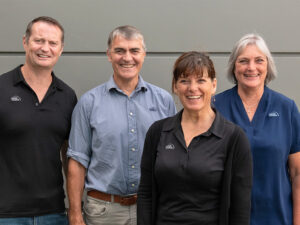
Pictured: L-R: Mobile Medical MITs James, Simon, Deb, and Karen.

The unit is also supported by a trio of skilled “steerologists” (drivers) who not only transport the unit but also maintain it, ensuring smooth operations across the country.

Reflecting on the organisation’s milestone, Dr Jon Cadwallader shared, “The mobile lithotripsy unit was the embryo of mobile units in the country. I’m very proud of being involved. I’m not one to come to the fore very much, but it’s been a great privilege to be part of the journey. It’s a great privilege to be a surgeon, to be a doctor, to look after people.”

Pictured: (L) Stu Gowland acknowledging Jon Cadwallader (R) for his remarkable contributions to Mobile Medical.

In 2020, Stu Gowland became a Companion of the New Zealand Order of Merit for his contributions to rural health services. Stuart, who retired in 2019, also founded the mobile surgical unit in 2002, which has treated almost 35,000 patients across the country. A man ahead of his time, Stu was the driving force behind the development of video conferencing in the early 2000s to enable professional development for rural doctors and long-distance surgical consultations.

Jon and Stu remain close friends and have travelled the world together exploring mobile concepts. Their shared vision and dedication have left a lasting legacy in the field of urology and mobile health services.

Here’s to 30 years of Mobile Medical – and gratitude to our incredible team.